Steps towards a Ph.D.: How to make repetitive work easier?

Data processing can be time-consuming, but it’s an essential skill. If you don’t handle repetitive tasks smartly, they can drag on. Plus, knowing how to manage these tasks easier will save us time for more meaningful things or give us a minute to relax.

For example, during my thesis, I learned how to make some tasks on the computer faster and more automated. As a result, I could focus on more relevant jobs, invest more time in hobbies I enjoyed, and even write this blog.

The lab’s most valuable resource is time, and using it wisely is the key to success. So, in this article, I wanted to share eight tips that I’ve found helpful to make repetitive tasks easier:

“He who can copy can do” -Leonardo da Vinci. 

When it comes to working fast, using prepared templates and protocols is essential. Let’s say we are repeating an experiment a third time while using the same conditions; the number of samples is different. We can write the protocol from the beginning, copy it from our previous experiment, and make small changes.

The best way to accomplish this is using an electronic lab notebook, such as Notability. With this app, you can upload separate protocols in the same notebook, add hand-written comments, mark progress with an Apple pen, and, most importantly, use the lasso tool. This tool allows me to copy and paste previous hand-written calculations and to update relevant information, such as the number of wells and the outcome of my calculations.

For a quick tutorial on using the lasso tool cleverly, I’d recommend watching this short video – it’s straightforward.

Alternatively, you can prepare a template in excel for your calculations. Or, you can check out the collection of electronic protocols for typical assays used in research (work in progress) here.

Combine fun and work 

We are tempted to passively perform repetitive tasks and to divide our focus. While outlining irregular wound scratch assays, I sometimes watch TV or do something else. When I outline them, the program I use mustn’t freeze or lag, the process itself should be as smooth as possible, and mistakes should be easy to fix. It works for tasks that do not require full attention and are easy to fix if something goes wrong. To outline irregular migration assays, which lack contrast to the background, investing in an Apple pen was extremely valuable.

The picture was generated via the link, using Bart Simpson Chalkboard Generator.

Optimize your focus 

The first thing to optimize your focus is to identify tasks requiring a high level of attention. These tasks demand thinking or cost a lot of resources (time, materials) to fix if a mistake has been made. As a result, I have developed several ‘hacks’ that have helped me stay focused on what I’m supposed to be doing. Firstly, you can track your progress on known protocols even when you are tired or multitask between experiments by marking ticks as you proceed. Changing the alignment of test tubes after working with them is another trick. A task that is not recorded on paper is not completed. Successful focus begins with a break during which you wind up and satisfy your basic needs.

Whatever you can batch process, do it

In the world of computers, there’s this thing called ‘macro,’ which enables you to batch process almost anything. I have a video about this, and if you want to find out more, I have a pretty awesome guidebook about batch processing in image j, excel (in progress). 

The idea behind macro is that we don’t push buttons or icons repetitively to perform the exact same task on the program. Instead, we teach a computer what steps to do, which files to process, and where and how to export outcomes.

And if you’ve had that experience where you’ve pressed a thousand times the same three buttons on the program, and you’ve entirely started to feel like a robot, that’s just because you haven’t given this task yet to macro, an actual robot that should have been doing this in the first place. 

Save time by investing in time-saving skills.

There is something about the word programming that can instantly induce anxiety for some people. It’s especially true when we’re just starting something, and we don’t know what we’ll be able to achieve. At the start of any learning, we need an injection of positivity, simplicity, and instant results to see whether it is worth our efforts. But if we can see that these results are applicable and save us time, like understanding basic programming to batch process our data, we should dive into it.

Whether you want to batch process your data using image j, Excel, or R or simply survive your biostatistics class, here is a basic introduction to programming.

There is no need to do everything on your own

As my friend advised, I should place my pride/fear of asking for help deep in the drawer and lock it. It can be retrieved after meeting people. There is a huge chance that someone has already faced your issue or has enough experience to handle it smarter, not harder. Indeed, dealing with people has its peculiarities, such as working on a collective project, but as the African proverb goes, “Go alone if you want to go fast. If you want to go far, go together.” [1]. Do I always listen to my friends’ advice? My heart tells me it’s the right way to implement it, even if I’m not always convinced.

Choose bare-minimum time for implementing tasks.

Most of the time, I do tedious, repetitive tasks with a timer because starting is the biggest problem, and I keep putting it off. To make your lazy days’ tasks more manageable, pick the minimum time to complete them. Compounding effects work in the end, so sometimes it’s better to do a bit than nothing. If it worked in economics, it would work for you too.

Conclusions

Time is the only currency people steel; they quickly trade but never get it back. Your time in the lab or doing something you enjoy is worth more than being a robot pressing the buttons, so do repetitive tasks smarter, not harder.


[1] Whitby Andrew. Who first said: if you want to go fast, go alone; if you want to go far. Accessed on the Internet [3 Jan 2023]. Available via link
Cell Viability Protocol

Protocol:

  1. Seed (number, cell type) cells per well in a 96-well plate in (volume) μL of (type) media.
  2. Incubate the plate for 48 hours under experimental conditions.
  3. Add 10 μL of the CCK-8 reagent (not sponsored; we use it – Abcam, cat. No. 228554) to each well.

Pro Tip: Prepare a mix of CCK-8 (10 μL) and serum-free media (100 μL) for all wells, and add 110 μL of mix into each well. Use the multi-channel pipette to load the mix into wells.

  1. Incubate the plate for an additional 1-2 hours.
  2. Measure the absorbance at 460 nm with a 540 nm reference using a spectrophotometer. The water-soluble tetrazolium salt WST-8 5-(2,4-disulfophenyl)-3-(2-methoxy-4-
    nitrophenyl)-2-(4-nitrophenyl)-2H-tetrazolium, inner salt, monosodium salt is taken up and reduced in the mitochondria of viable cells to a soluble orange formazan dye. The absorbance is directly proportional to the number of viable cells.
  3. Normalize the cellular proliferation to the experimental control.


Key Notes:

(a) To save time, use the pro tip.

(b) Calibrate the number of cells, so there is minimal variation between duplicates and triplicates of each sample.

(c) Calibrate the number of cells so the supernatant can be collected at the same time for ELISA analysis. 

(d) The method does not require cell lysis, so it is possible to move on to additional cell-based assays or downstream applications without killing cells [1].

To download the template, use the embedded document:

Bibliography:

1. JEAN-FRANÇOIS TÊTU. Do you use MTT or WST-1 to count cells? Created on 20-05-2016. Accessed on the Internet [14 Feb, 2023] via the link: https://www.tebu-bio.com/blog/still-using-mtt-or-swt-1-for-cell-counting/

Accelerate Your Foreign Language Skills

A few years ago, I started working as a medical intern in a hospital with only a limited understanding of Hebrew. As a doctor, you cannot hide behind a computer screen until you improve speaking in a foreign language. Every day you need to use language to communicate with your patients and other team members. It would have been better for me to learn Hebrew gradually, but sometimes life puts you in a situation where you must keep swimming to survive. And not just to keep swimming but also to do it fast. Prior to my internship, I studied only the basics of the Hebrew language at home, followed by two courses at the University of Haifa (levels B to C, non-medical Hebrew). Stepping into an intern’s job was challenging, but everything was manageable. During this experience, I learned a number of tips that can assist you in learning a foreign language faster.

1. Rethink Your Thoughts To Transform Perspective

Learning a foreign language comes with one major hurdle – being afraid of sounding stupid or slow. Mistakes are inevitable, and they are a part of the learning process, but everything improves with time. Also, I cannot guarantee that you will be as smart or fast as you are in your native language. The only thing that depends on you is thinking. Try to change your perspective because I can assure you that having a limited vocabulary in a foreign language can be advantageous. During challenging moments, I am always trying to remember what my colleague from the Hebrew class once told me: limited vocabulary may be your strength since you wouldn’t rely on medical jargon to communicate with your patients. And he was right. At that time, my knowledge of specialized terminology in a foreign language was inadequate, so I had to use simpler terms that were easier to understand for my patients, as well.

Limitations force the speaker to simplify the language and avoid using complex terms, making the language clearer for the listener. However, the ability to explain complex ideas in simple terms requires a deep understanding of the subject matter. Therefore, the newbie will expand his professional expertise by speaking a foreign language.

Albert Einstein said:

“If you can’t explain it simply, you don’t understand it well enough”

2. Protect Your Unique Story: Don’t Let Others Undermine Your Experience

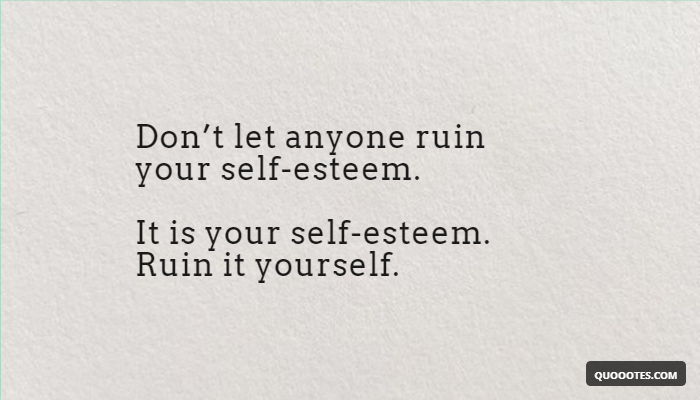
I saw on the internet the meme stating, “Don’t let anybody to ruin your day. It’s your day. Ruin it by yourself”, which inspired me to reinvent it.. The message is clear: we have the power to control our own thoughts and emotions. Therefore, we shouldn’t let others dictate how we feel. Instead, we should take responsibility for our lives and not allow external factors to ruin them.

While starting to speak a new language, you must not only overcome your fears and problems with self-esteem but also overcome other people’s reactions. Most people are kind, but sometimes due to a stressful environment, personal temperament, or previous encounters with language newcomers, they may react impatiently to your progress. You may encounter both productive and unproductive criticism and sometimes receive unkind looks, but keep taking care of your business.

Back then, when I heard stories of others who had to leave their internship after internal medicine and emergency medicine cycles, I was discouraged from starting my internship early. This was due to my limited vocabulary. Despite the fear and doubt, I was grateful to have support from my family and continued with my plans which in the end were fulfilled. During my journey, I learned to be more patient and to communicate more respectfully. Now that I am aware of how it feels, I try to cut it short subtly and respectfully so I can concentrate on higher-value tasks.

3. Preparation is the key to success

As you learn the language, set a high goal to achieve maximum proficiency within a reasonable timeframe. However, there are other significant preparations you can make to support your efforts. One famous quote about the importance of preparation is attributed to the ancient Chinese military strategist Sun Tzu.

“Every battle is won before it’s ever fought.”

This quote highlights the importance of preparation and planning in any competition. It is much easier to achieve your goal when one is fully prepared and has thought through all the possible outcomes. The following are a few personal hacks you can use to improve your foreign language skills quickly.

  1. Study Relevant Documentation
    If possible, obtain and study samples of the paperwork you will encounter daily at work. For example, I studied the medical histories of my family members. Analyze the abbreviations, popular international terms, sentence structure, and conjunctions used. Practice using the correct conjunctions to improve your flow and try to adopt the style of your colleagues.
  2. Utilize Free Time for Analysis
    During any free time at work, dedicate it to analyzing available paperwork, conference materials, and presentations by your colleagues.
  3. Practice Summarization
    Try summarizing patient cases or any information you need to present, even if you don’t actually have to present it. Set limitations for yourself in terms of sentence count or time. This helps you save time, develop your sentence structure, and provides you with the opportunity to practice your newly acquired language skills.
  4. Look for Patterns
    If you are familiar with the job, you can create conversation templates with a focus on yes/no questions. This can be helpful at the beginning, but keep in mind that it may not always work. I created pre-planned templates for each body system based on patient complaints, which I used daily at work. Over time, the templates were modified to suit my needs until they no longer served me.
  5. Learn Only What You Need to Know
    When learning vocabulary, focus on terms that you’ll actually use at your work to communicate with your colleagues or to write documentation, as required. Use the internet to find lists of the most frequent words in a specific language. Here is a link for the 10,000 most commonly used words in Hebrew.
  6. Immersion is Essential
    Stop speaking in any other language and focus on communicating only in the language you’re trying to learn. My cases were always presented in Hebrew, even when I was allowed to present them in English. This was challenging, but speaking is the only way to improve your skills.

Why Does His Work Speaks for Itself Better Than Yours?

A few years ago, I attended a conference for pharmacists who specialize in working with medical cannabis. An expert on cancer and medical cannabis gave a presentation after the introductory speech. The lecture was intended for a general audience without prior experience in lab work. It is likely that he was able to secure substantial funding through his brilliant research, strong management skills, and ability to effectively deliver his ideas from brain to tongue. In addition to scientific findings of his team, his presentation was engaging in another aspect. There was a sense of confidence and persuasiveness in his presentation.

According to the presenter, his lab was capable of conducting 96 independent experiments simultaneously to test the hypothesis, namely whether Cannabis extracts inhibit tumor cell viability. His team found that Cannabis extracts with similar levels of (-)-Δ9trans-tetrahydrocannabinol (THC) had significantly different effects on tumor cell survival in vitro, and that tumors respond differently to cannabis extracts depending on their receptors [1]. It is currently mandatory to specify the route, concentration of cannabidiol and THC when prescribing medical cannabis to patients in Israel [2]. Based on this research it is critical to note, however, that even extracts with similar levels of THC affect tumor cell survival differently. As a result, more research is clearly needed to improve guidelines for prescribing cannabis for medical purposes.

So far, medical cannabis benefits are more based on the host and the product. There are no guarantees when it comes to anti-tumor properties for a specific tumor, especially with current knowledge, guidelines and products. It is no secret that products in the country are changing very rapidly. Basically, I don’t claim it works as anti-tumor agent, I don’t claim it doesn’t, but it is clear that more research is needed. For now, let’s put this aside.

However, what does it actually mean to be able to perform 96 different cell viability tests each time?

Was he right? Yes, he told the truth. Did it sound impressive to a general audience at that moment? I think so. This choice of words emphasizes repetition, adds a sense of quantity, and gives the listener a sense of trust in the data. But is it really that impressive? It’s doubtful… A simple 96-well plate is used to seed tumor cells, incubate them with viability agents, and then read them on a plate reader or using another method. Almost any Ph.D./M.S. student does these 96 experiments every day/week. Some people are naturally good at it, while others need to look carefully for ideas on how to present their work.

According to Austin Kleon in his book “Show Your Work! : 10 Ways to Share Your Creativity and Get Discovered”:

” Words matter. Artists love to trout out the tired line, ” My work speaks for itself”, but the truth is, our work doesn’t speak for itself. <…> The stories you tell about the work you do have a huge effect on how people feel and what they understand about your work affects how they value it”

I highly recommend it to anyone who needs a boost to start showing their work. Available via a link on Amazon. It was a personal recommendation, not a promotion. It’s thanks to Ali Abdaal that I got this book.

How important is it to speak up for your work?

Aside from academia, medicine, conferences, and pharmacy, we express ourselves at every job requiring human interaction. Often, we represent our workplace. Making meaningful connections, providing professional advice, and sometimes even persuading others to follow our expert advice depending on how we talk about what we do. The art of words may help us acquire funding or get published. We use it sometimes to express our appreciation to sponsors.

Recently I received an email from Technion informing me that my thank-you letter has been selected for delivery to Technion supporters for my Doctoral Fellowship in 2021/2022. Is it a big deal? Probably not, but knowing I can reach somebody to advocate for my work with a few keystrokes is pleasant. In the future, I hope that my son will be able to speak for his work or at least express himself in a way that touches other people’s souls no matter what field he chooses to pursue.

[1] Baram, L., Peled, E., Berman, P., Yellin, B., Besser, E., Benami, M., Louria-Hayon, I., Lewitus, G.M. and Meiri, D. (2019). The heterogeneity and complexity of Cannabis extracts as antitumor agents. Oncotarget, 10(41), p.4091. Available on Internet via link. Accessed on Internet [6 Feb 2023]

[2] Aviram, J., Lewitus, G.M., Vysotski, Y., Abu Amna, M., Ouryvaev, A., … & Meiri, D. (2022). The effectiveness and safety of medical cannabis for treating cancer related symptoms in oncology patients. Accepted to Frontiers in Pain Research.‬‬‬ Available on Internet via link. Accessed on Internet [6 Feb 2023].

How to Batch Process in ImageJ for Dummies?

The core of any batch-processing code consists of the following:

  • Input directory
  • Output directory – I believe in most cases it is better to save the output in a separate directory, especially when working with more complex tasks. The example below, however, does not include an output directory.
  • Loop {} – indicates repetitive actions
  • File opening
  • Manipulations
  • File saving

This macro will process all the images in the selected source directory. It opens each image, converts it to 8-bit, applies “Smooth” and “Find Edges” filters, saves the processed image as TIFF with the prefix “processed_”, and closes the image. You can modify the steps according to your needs.

// Batch Processing Macro for ImageJ

dir = getDirectory("Choose Source Directory ");
list = getFileList(dir);

for (i=0; i<list.length; i++) {
opening
  path = dir + list[i];
  open(path);
//Manipulation
  run("8-bit");
  run("Smooth");
  run("Find Edges");
// saving
  saveAs("Tiff", dir + "processed_" + list[i]);
  close();
}

To run a macro in ImageJ, follow these steps:

  1. Open ImageJ.
  2. Click the “Plugins” menu, then select “New” and then “Macro”. This will open the macro editor.
  3. Copy and paste the macro code into the editor window.
  4. Save the macro using the “File” menu and give it a descriptive name, such as “BatchProcessing.ijm”.
  5. Close the macro editor.
  6. Navigate to the “Plugins” menu, then select “Macros” and then “Run”. This will open the window where you need to find the directory and select in it the name of the macro you just saved. Choose Open.
  7. The macro will run and process the images according to the steps defined in the code.

Note: You may need to modify the macro code to fit your specific needs and input the image

Where can this be applied?

You can automate any Image J task that requires repetitive button pressing. I’ve used it to merge two different fluorescence channels for all images. Additionally, I used it to add scale bars to pictures as well as extract coordinates for wound healing analysis.

If I have no experience in coding, what should I do?

Four options are available in this case:

  • To begin with, I strongly believe you should learn how to do it. The more you understand the basics of any coding language, the more you’ll understand how computers work. Furthermore, if you explain your needs clearly to the computer, it will solve your problem more effectively. Using documentation as your vocabulary source and adapting codes posted in forums will enable you to solve your problems.
  • To create your final puzzle, you can use the macro recorder in Image J to record your steps.
  • The codes can be borrowed from other forum members, such as the one here for Image J.
  • In addition, ChatGPT, which everyone is talking about nowadays, can help you generate code templates faster without no knowledge of coding. Based on my request, ChatGPT generated the code above. Check it out. It is completely free. You can get started right away by registering here.